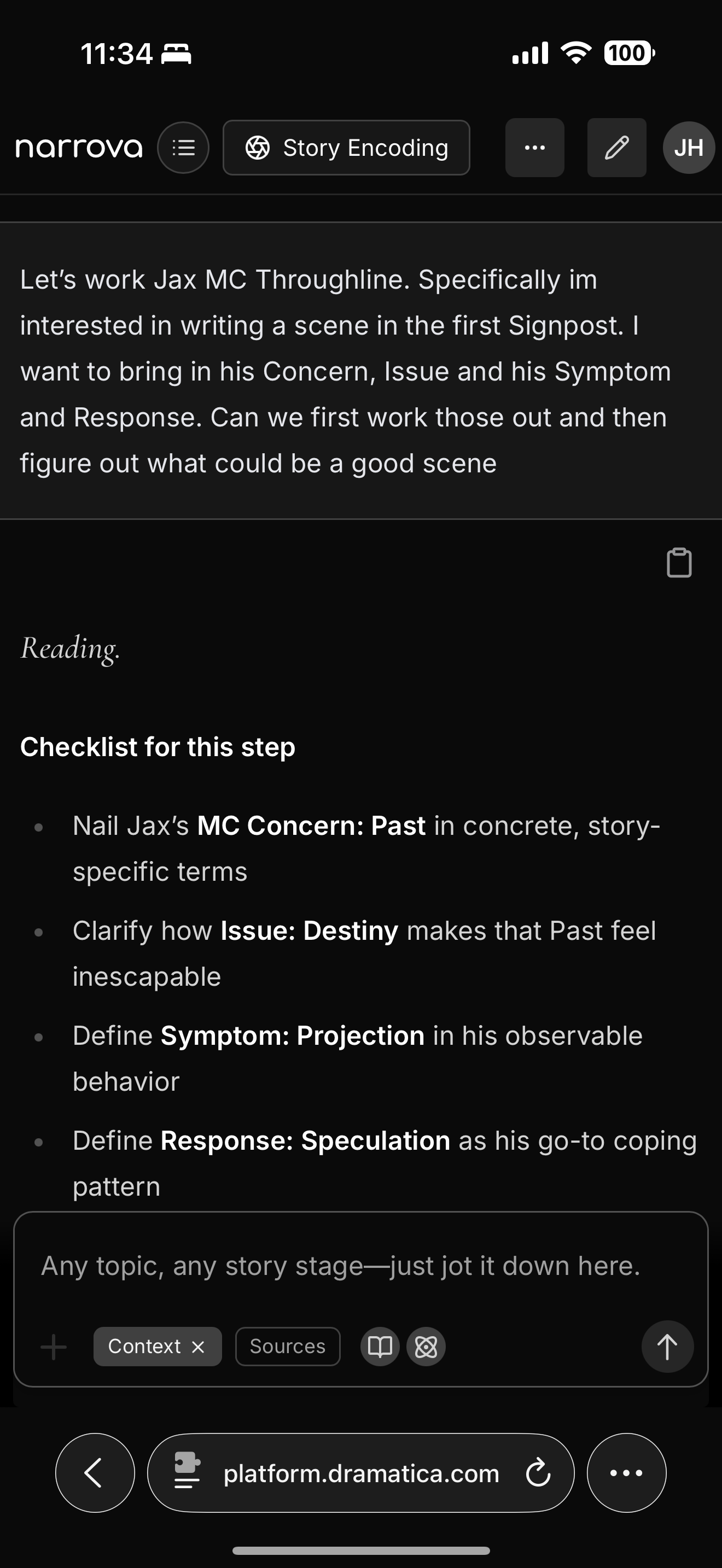
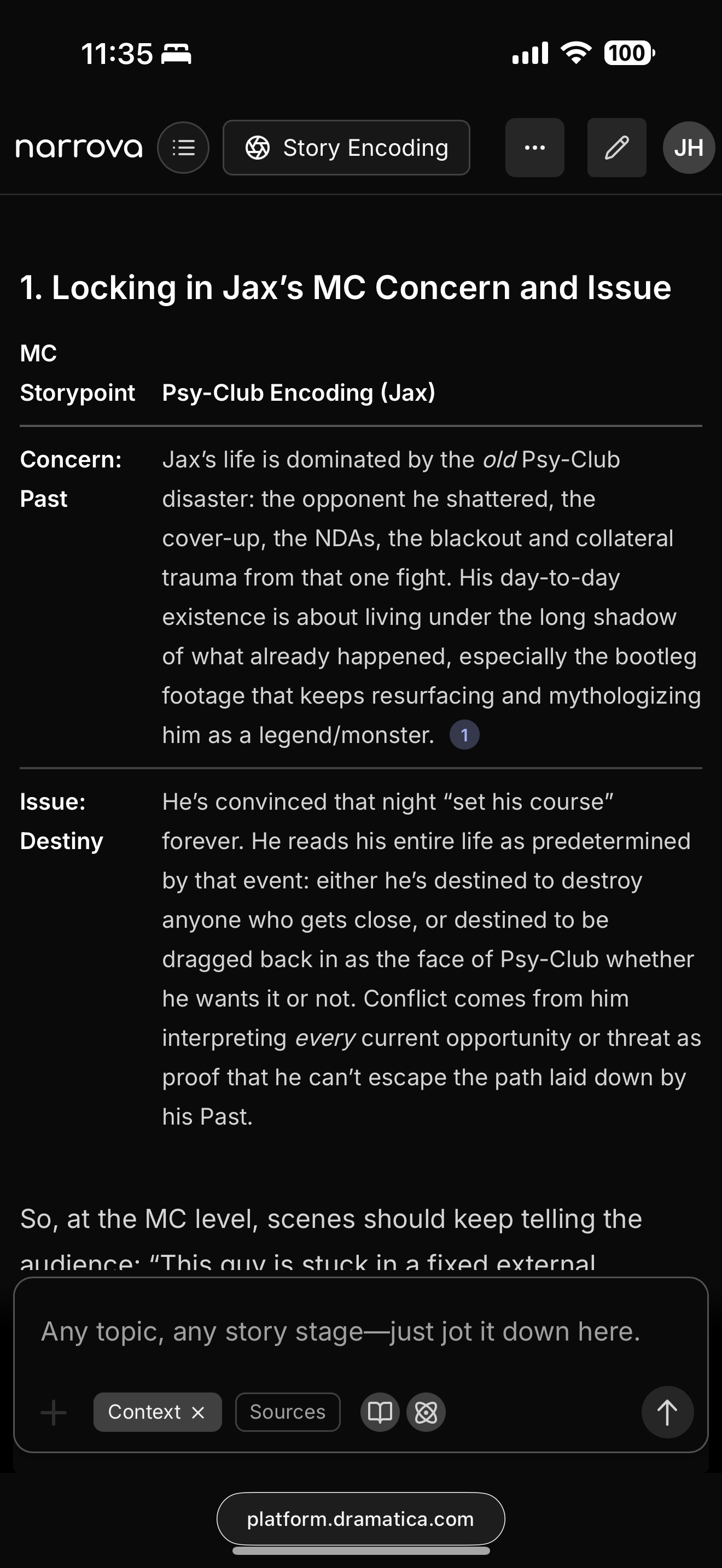
And here’s that Psy-onics story based on the Storyform from Fight Club!
In the early nineties, before anyone had language for what Psyonics really were, there was a rumor passed between skate parks and strip‑mall arcades: if you found the right roller rink, on the right night, you could watch gods bleed under blacklight.
Jax Rios was one of those gods.
Barely out of high school, he threw telekinetic uppercuts that could rattle ceiling tiles and warp neon signs. Psy‑Club was his whole world: abandoned bowling alleys and VHS cameras, your aura spilling in colors only a gifted few could see. The fights were brutal but intimate, a pressure valve for kids whose minds wouldn’t stay inside their skulls.
Then came the night everything cracked.
One bout went too far. Jax lost control. His opponent’s mind shattered in front of a crowd of fifty and a buzzing camcorder. The psychic shockwave took out power across half the city and left a ring of spectators with years of night terrors. By morning, Psy‑Club was gone—shuttered, erased, buried in nondisclosure agreements and quiet payouts. Jax disappeared into a life of careful anonymity, working under fluorescent lights and pretending every headache was just stress.
Decades later, the world has changed. Streaming platforms eat hours of attention a day. Metahumans and Psyonics are no longer urban myths; they’re markets. When a grainy clip from that fateful nineties fight surfaces on a retro conspiracy channel—Jax frozen mid‑punch in a storm of ultraviolet fire—it doesn’t spark outrage. It trends.
Enter Lyra Kane: billionaire, content queen, and lifelong obsessive of the old Psy‑Club legends. To her, the tape isn’t evidence of a crime; it’s proof of an untapped genre. She starts buying up old rinks and arcades like she’s collecting relics, hiring security firms and think tanks to “reimagine” what Psy‑Club could be for a global audience.
To make it work, she needs two men.
First is Kade Mercer, co‑founder and ringmaster of the original Psy‑Club. Kade never stopped believing in what they built. In his memory, Psy‑Club was a holy place: a sanctuary for broken minds, a stage where kids like Jax could finally be seen. He’s older now, but his charisma hits like a live wire. The moment Lyra finds him, he sees a chance to drag his lost creation back into the light—and to rewrite how the world remembers it.
The second is Jax.
He’s older too, hiding in a city that long ago paved over his legend. When Lyra’s people track him down, Jax wants nothing to do with any of it. But the offer comes wrapped in practical chains: debt relief, medical coverage for the people hurt in that last nineties blast, a chance to “set the record straight” on live camera. And Kade is there, smiling like all of this is fate, promising that they can do it right this time.
Reluctantly, Jax lets himself get pulled back into the dark.
What starts as a “docuseries event” quickly mutates into a design war. Lyra’s glass‑walled campus fills with mood boards: tiered leagues, ritualized entrances, augmented‑reality overlays that translate psychic bursts into public‑friendly graphics. Focus groups watch private beta matches streamed from rebuilt roller rinks, rating fighters on charisma, trauma backstory, and “rewatch value.”
Jax and the other veterans are paraded through writer rooms and legal briefings. They’re asked to remember old matches in slow, marketable detail. Painful flashes of concussed minds and screaming light are recut into highlight reels. Every recollection they offer becomes raw material, a clip to be color‑corrected and branded.
Kade thrives in this world. He leans into the myth, retelling the old days in bigger colors each time. In his version, nobody ever truly broke; they transformed. Psy‑Club wasn’t reckless, he insists, it was necessary. Without that chaos, half these Psyonics would’ve ended up in labs or prisons. Now, with Lyra’s money and the world’s attention, they can build something unstoppable: a global ritual that finally gives people like them control of their story.
Jax watches this narrative harden around him like resin. The more he tries to stick to what actually happened—the ruined kid, the blackouts, the hospital corridors—the more everyone around him nods politely and frames his guilt as “part of his character arc.” Pain becomes just another asset in the pitch deck.
As the new Psy‑Club format takes shape, the tests get riskier. Early live streams roll out under euphemistic titles and tight NDAs. In a derelict mall, Jax is coaxed back into the ring for a closed‑beta fight. Under the glare of LED rigs and stabilized cameras, he faces a young Psyonic who grew up on bootlegs of his worst night and sees him as both hero and monster. When their minds collide, the old horror returns—distorted through a thousand fan edits and forum theories. For a moment, Jax feels the same wild, sick rush he did as a kid, and that terrifies him more than any concussion.
The audience metrics are off the charts.
Each incident meant to be a controlled test bleeds into the outside world: bursts of shared hallucinations in the viewing population, kids reenacting psychic moves they can barely sustain, networks of copycat underground rings popping up the second footage leaks. Lyra’s boardroom spins this as proof of market hunger. Kade calls it a spiritual awakening. Jax sees a pattern he’s lived through once already.