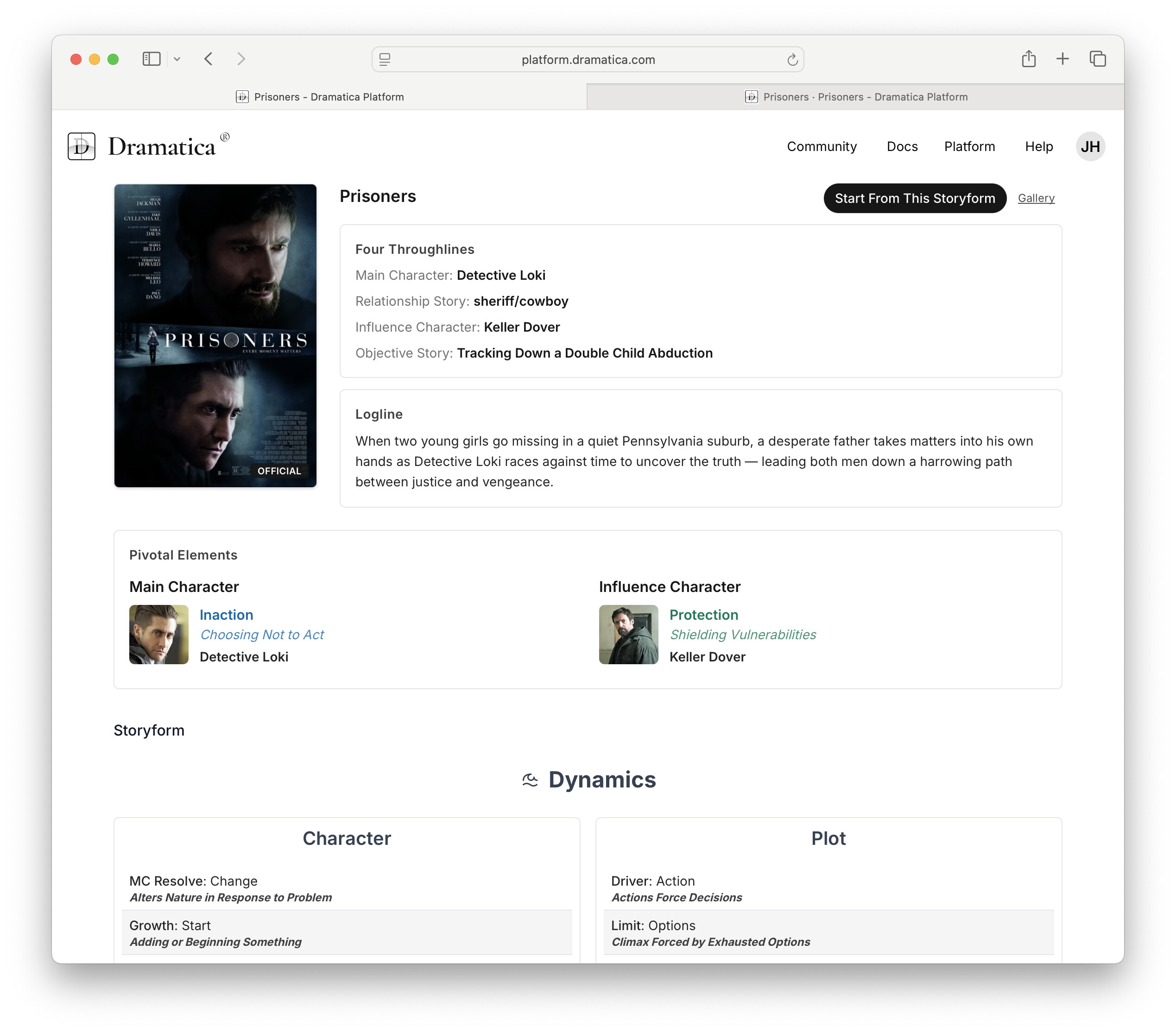
Ho ho ho—because nothing says the holidays like Denis Villeneuve’s harrowing thriller Prisoners!
Next week’s Dramatica Users Group meeting (Tuesday, November 11, 2025 at 7 p.m.) is dubbed our family holiday special, and we’re celebrating by descending into the depths of a kidnapping mystery. All are welcome—just make sure you watch the film beforehand (seriously, you’ll need those two and a half hours to process the dread).
At the meeting we’ll crack open the Storyform and look at how this thriller handles moral dilemmas, Throughlines, and dramatic tension. Bring your eggnog and a blanket if you get spooked; we’re going to sleigh this analysis together!
See everybody there at 7 p.m. Pacific next Tuesday
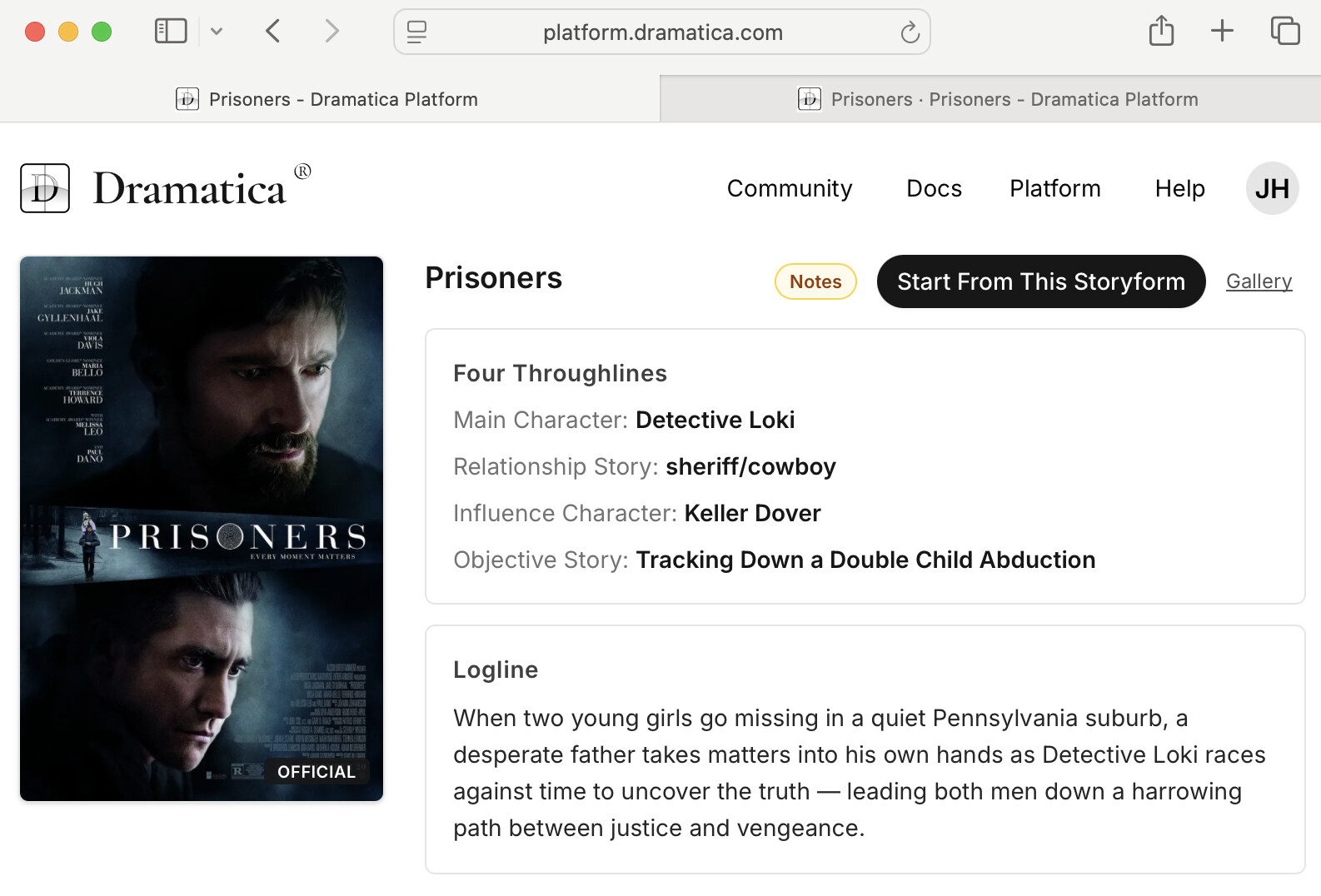
In order to help everyone better understand the official canonical Storyforms within the platform, we’ve added a new Analysis Notes section. This wraps up some of our findings during the analysis process and helps clarify why we chose one Storyform over another, or why a Storyform might not yet be complete enough to warrant a full, comprehensive analysis.
You’ll see these marked at the top with a small “Notes” indicator.
We hope this new feature deepens your understanding of Dramatica theory and helps you apply it even more effectively when developing your own great stories!
The analysis notes at the bottom explain our reasoning:
We include the Keller-focused Storyform not because it best describes the film as finally delivered, but because it documents the film’s compositional history and preserves the genuine audience pathway present in the first third. Practically, it explains interpretive friction—viewers who anchor immediately to Keller will report a different “MC I feel” than viewers who align with Loki by the climax—and it helps analysts and creators see how authorial choices (shifting to objective pressure versus subjective adaptation) altered the film’s argument. In short: the Holistic Loki Storyform is the most accurate for the completed film’s experience and claim, but the Keller variant is a necessary inclusion to account for original intent, early structural materials, and the real, recoverable MC-frame many viewers take away from the opening.
Hope this increases your understanding of Dramatica theory!