Was testing the most recent update to Narrova (March 2026), and had to step back - as this is pretty outstanding performance.
There’s a whole bunch I did over the past couple of months, and I think you’ll find Narrova even more comfortable helping you develop your stories. It’s no longer trapped in walled-off “rooms” for the individual Agents (Storyforming, Story Encoding, etc.) and instead, thanks to many many improvements in the capabilities of the models we use, we can now rely on Narrova to get the job done right the first time.
By means of example, and I’ll schedule a livestream this week (for real!) to go over everything, but this is one of Narrova’s “skills” which you’ll likely recognize from Subtxt…
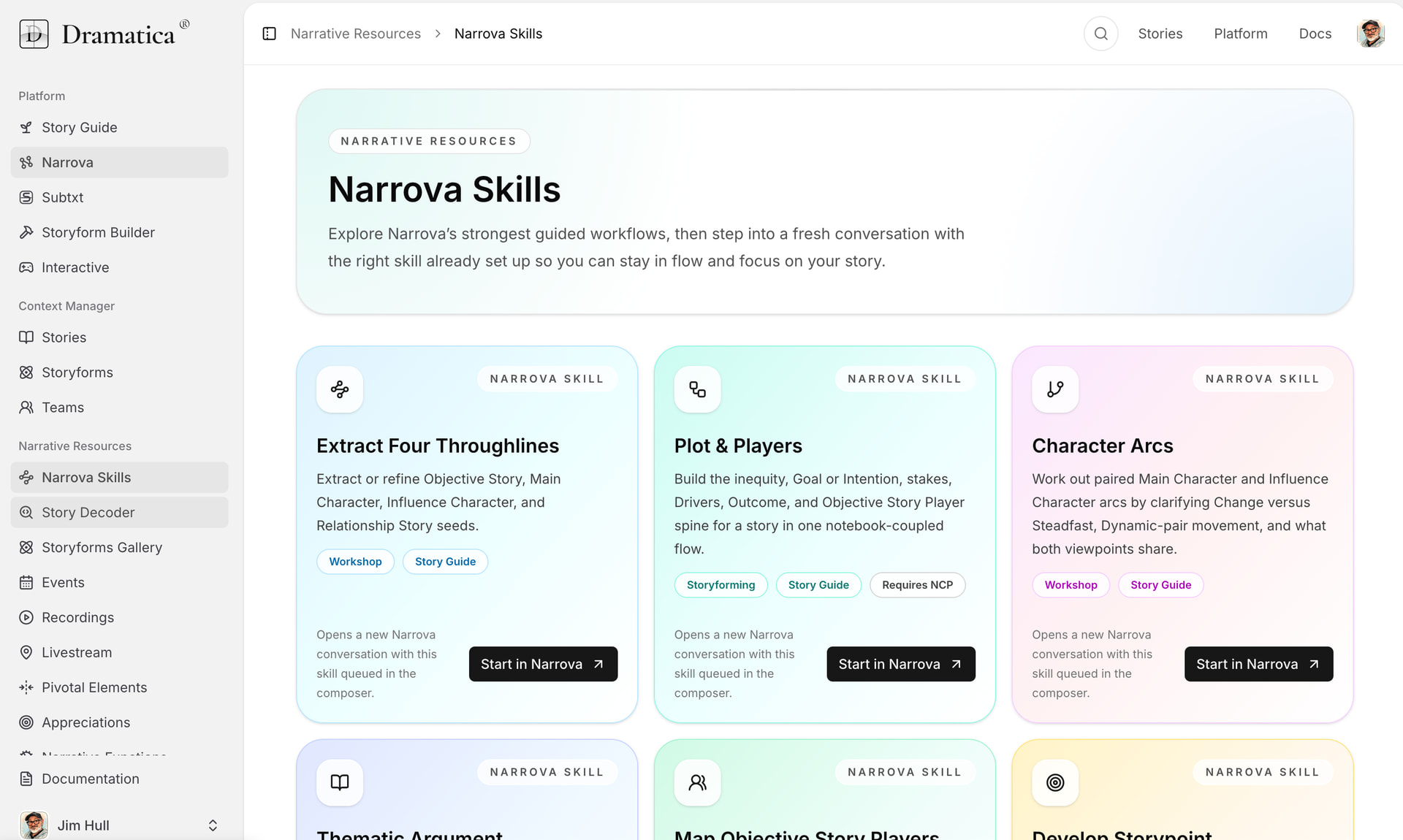
You can call these at any time you’re collaborating with Narrova, but one day to do it is straight off the top:
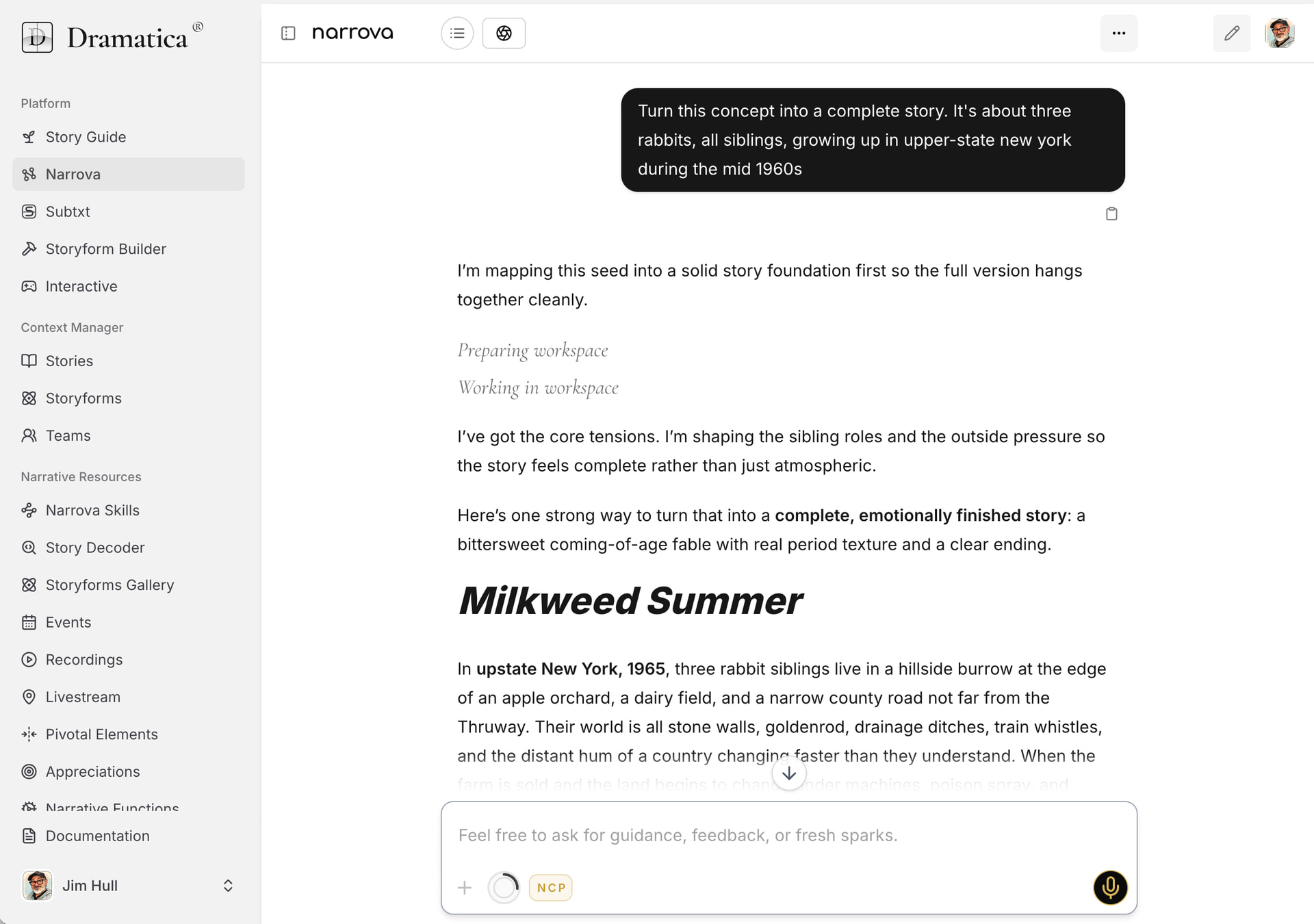
In earlier iterations of the Extract Four Throughlines skill, we relied on a linear, queue-based approach—one that could competently derive the Four Throughlines from a simple story idea, but only in a single pass.
Now, with iterative capabilities in place, Narrova can build on its own reasoning—layering inference, revisiting assumptions, and refining outputs to produce significantly richer and more coherent results.

Combine this with direct access to Dramatica’s underlying theory of story, and the system begins to demonstrate something far more compelling—what can only be described as narrative intelligence:
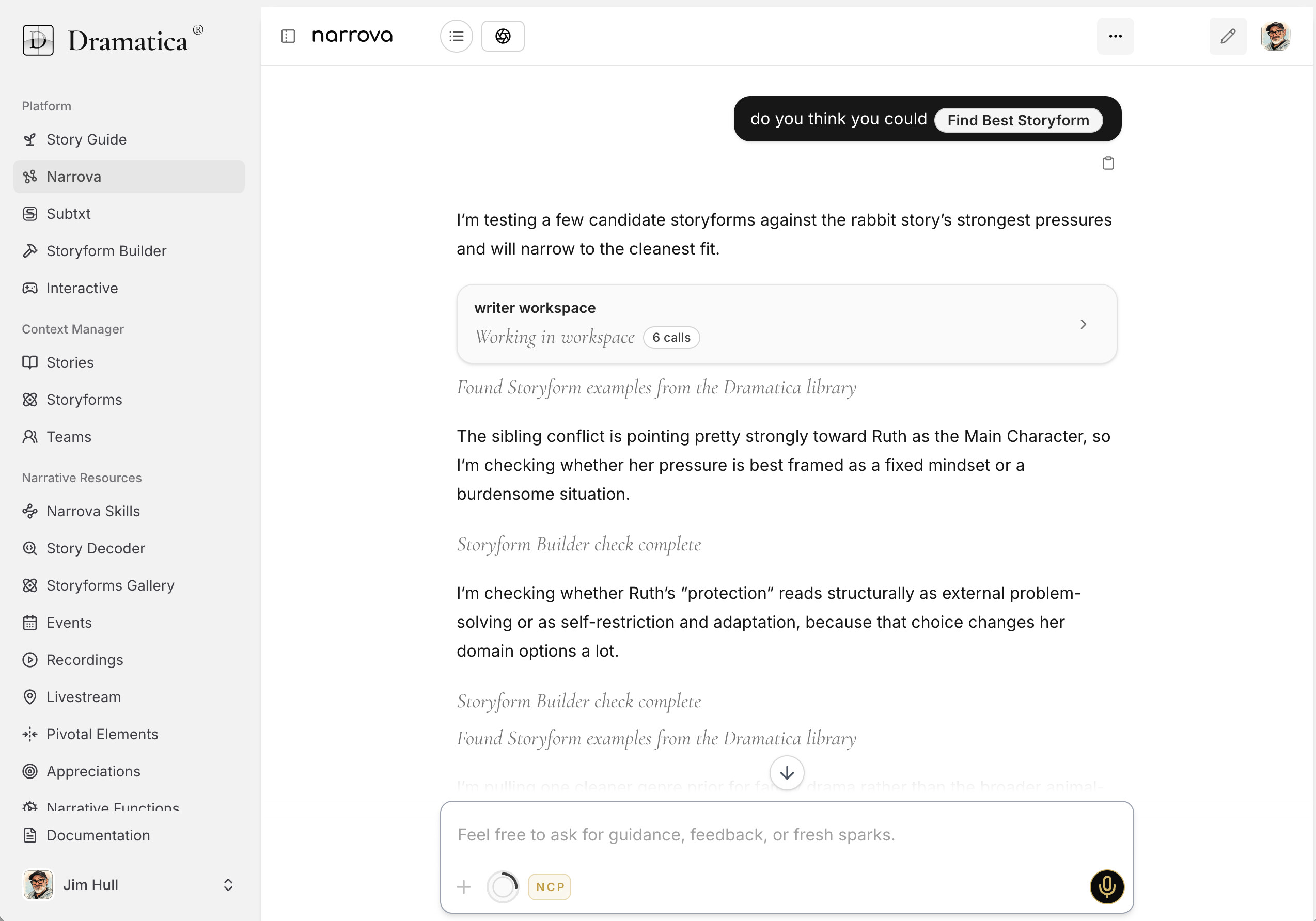
Find Best Storyform is another new Narrova Skill, connected directly to the Storyform Builder. It allows Narrova to traverse the 32,000+ possible Storyforms within the Dramatica model, evaluating and comparing them to identify the one that best aligns with the author’s intent.
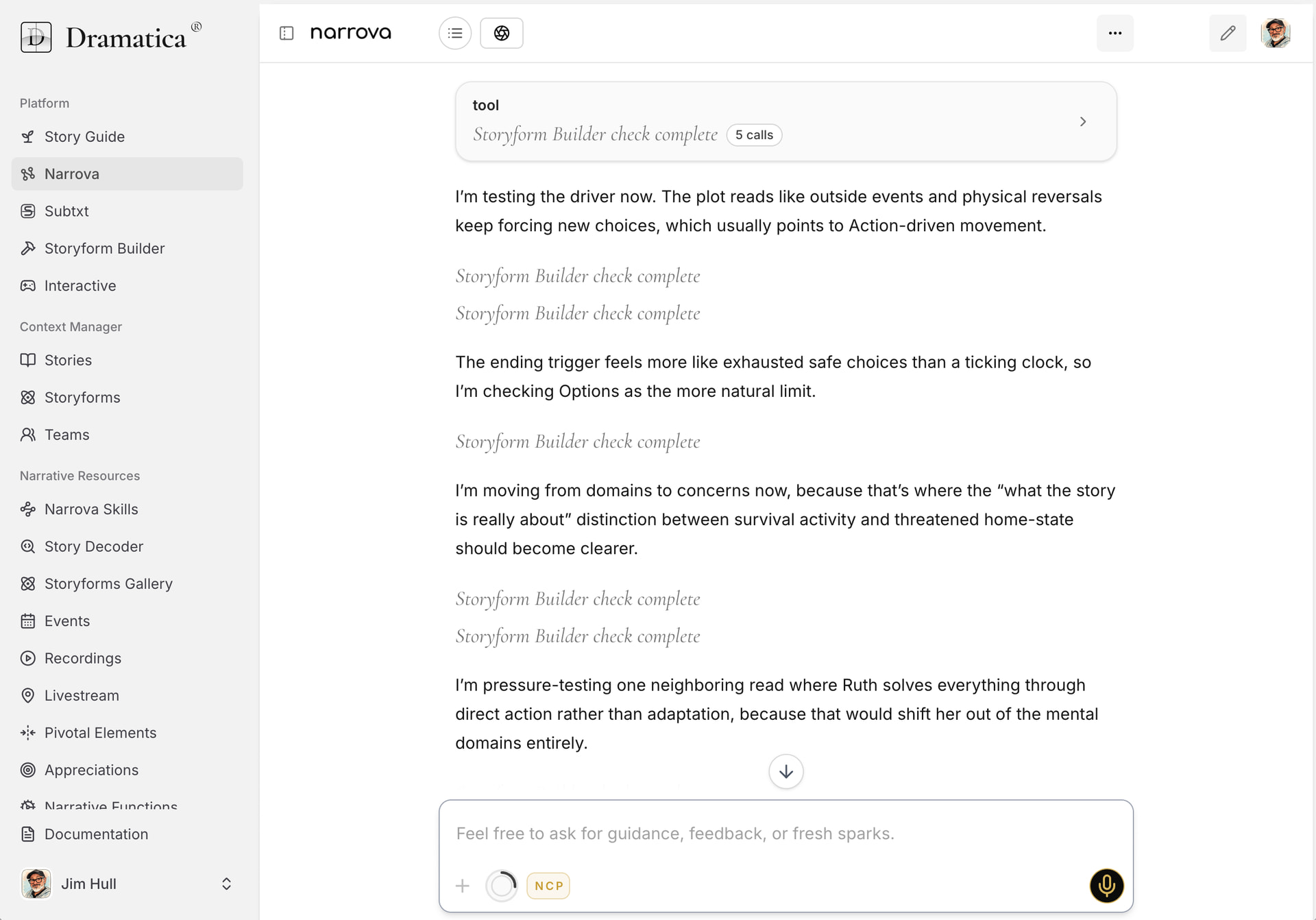
With extended reasoning time (this request took 5½ minutes), Narrova can explore potential sources of conflict, validate those choices, and backtrack when necessary—searching for the precise configuration of narrative dynamics that supports ongoing development and refinement.
In the end, Find Best Storyform returns the top four candidates, highlighting one as the strongest match for the story being told.
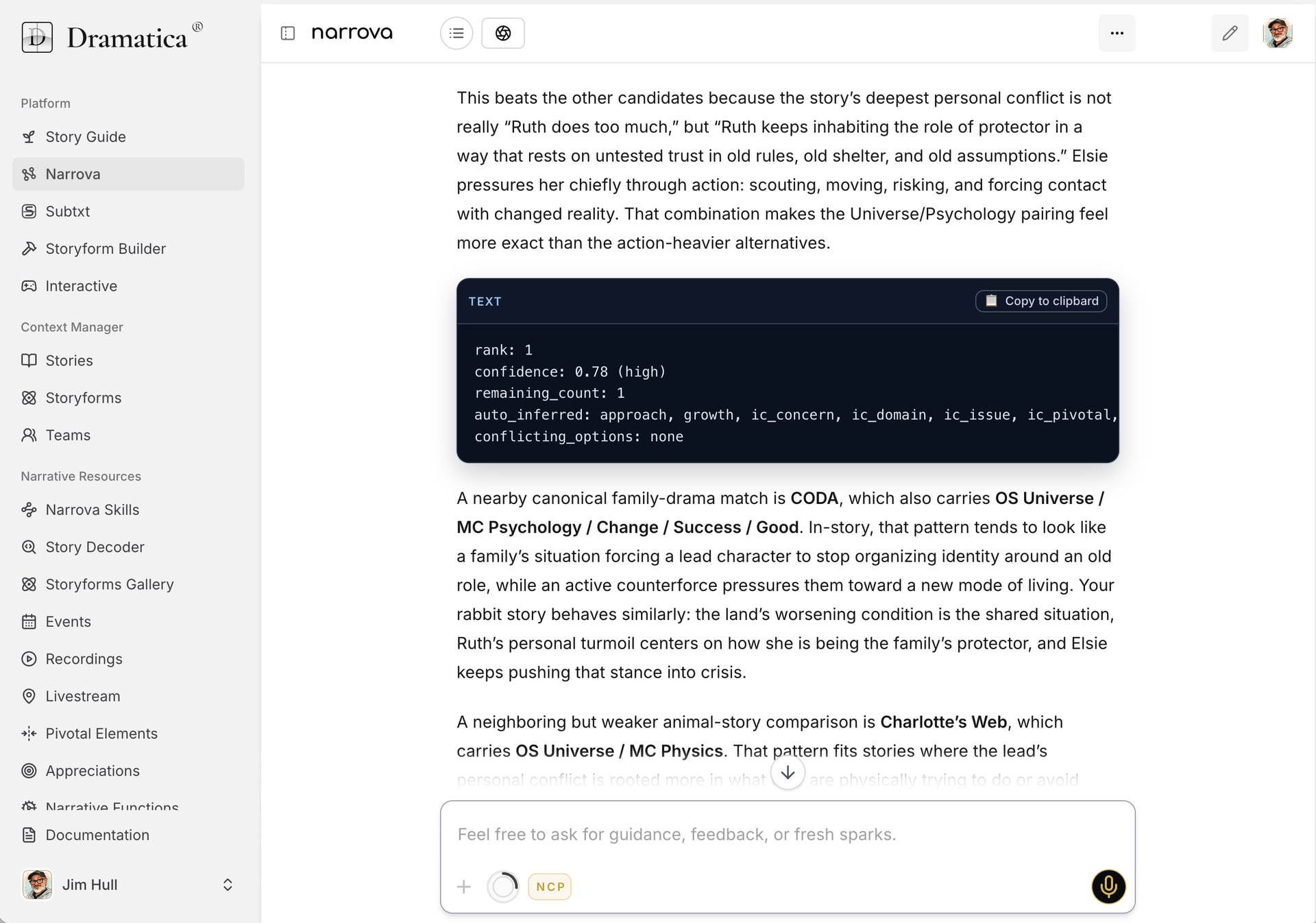
Drawing on over three decades of narrative research, Narrova can also reference prior analyses—such as CODA and Charlotte’s Web—to triangulate (or more accurately, quad-rangulate) the specific combination of narrative elements that work together to support a cohesive argument.
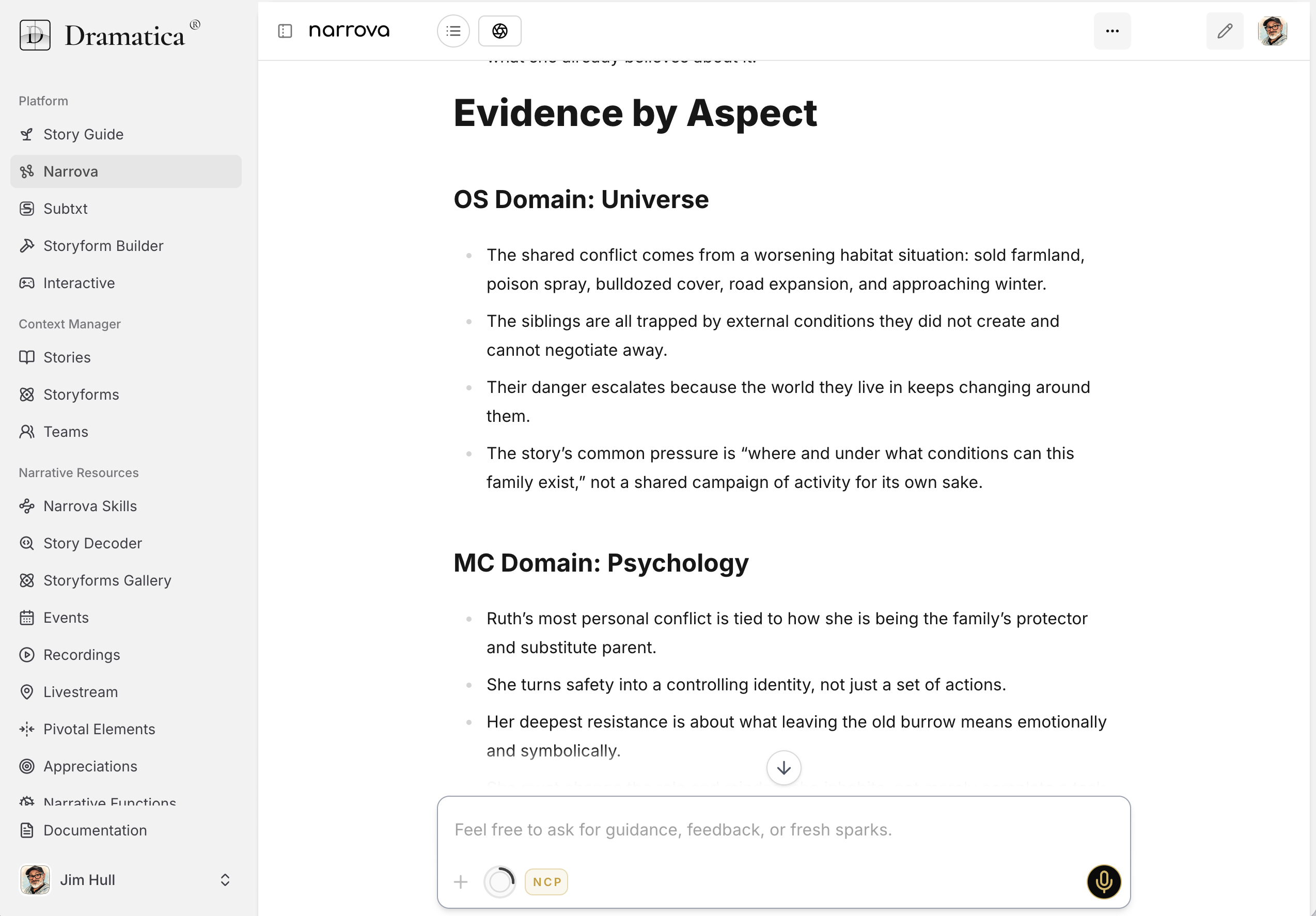
As with all great analysis, the review comes complete with evidence and backing:
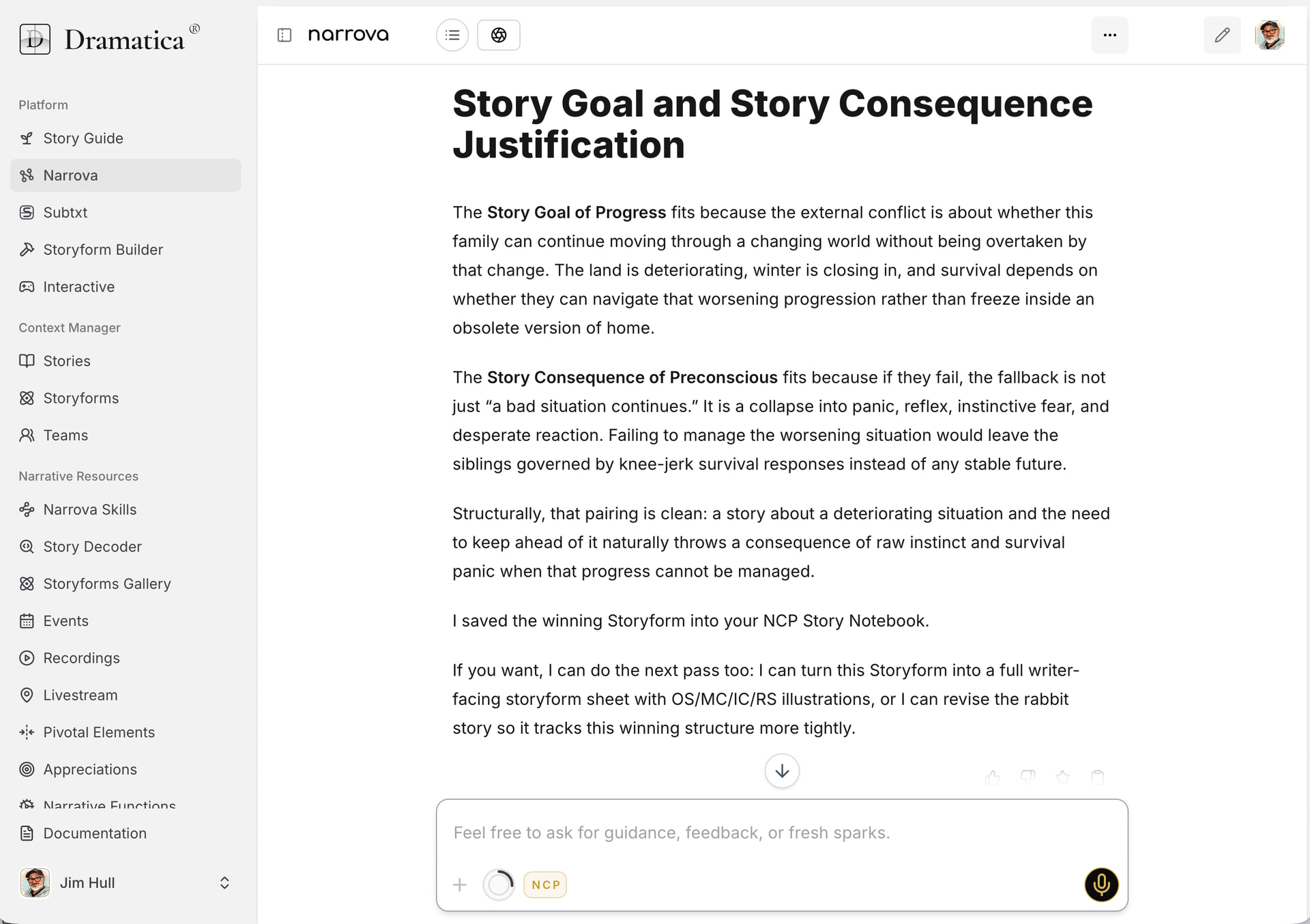
And even goes so far as to review its justification for where it focused the Goal and Consequence of the Objective Story Plot:
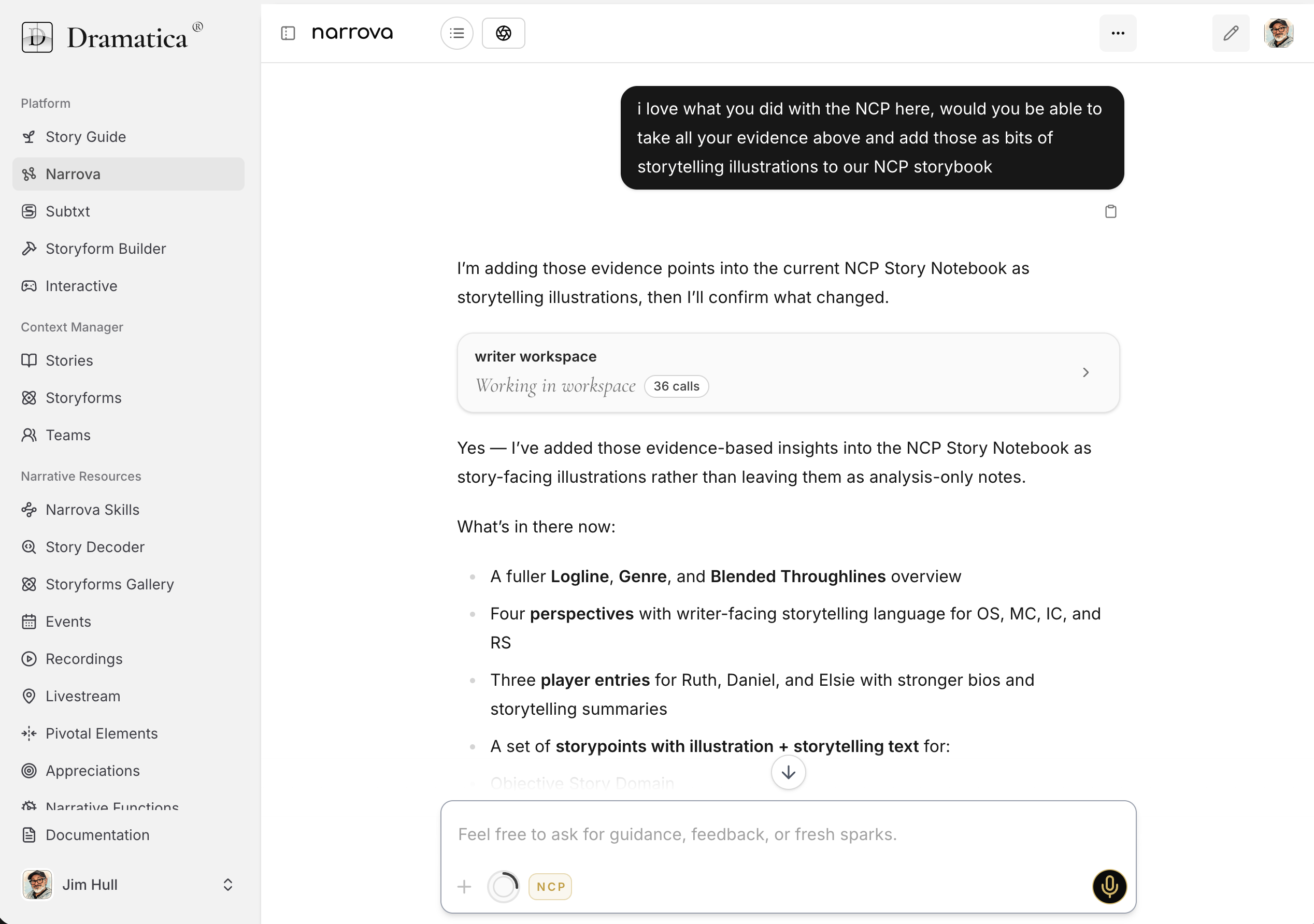
Narrova is quite literal, so while it may have saved the “winning” Storyform into our NCP Story Notebook, you can always nudge it to transfer everything discussed:
And because we believe so strongly in the transportability and efficacy of our approach, the entire Storyform is available to you for download through the open-source project Narrative Context Protocol (NCP):

This JSON object is perfect for slotting into any part of your production’s pipeline (or just for using for your own side projects!).

If you’re a subscriber to the platform, try out these new Skills and let us know how it goes. Otherwise we’ll see you later this week!

 It felt like I was talking to someone who’s actually read all 10-12 books of the series, even though most of them are still in my head!
 Thanks for sharing…